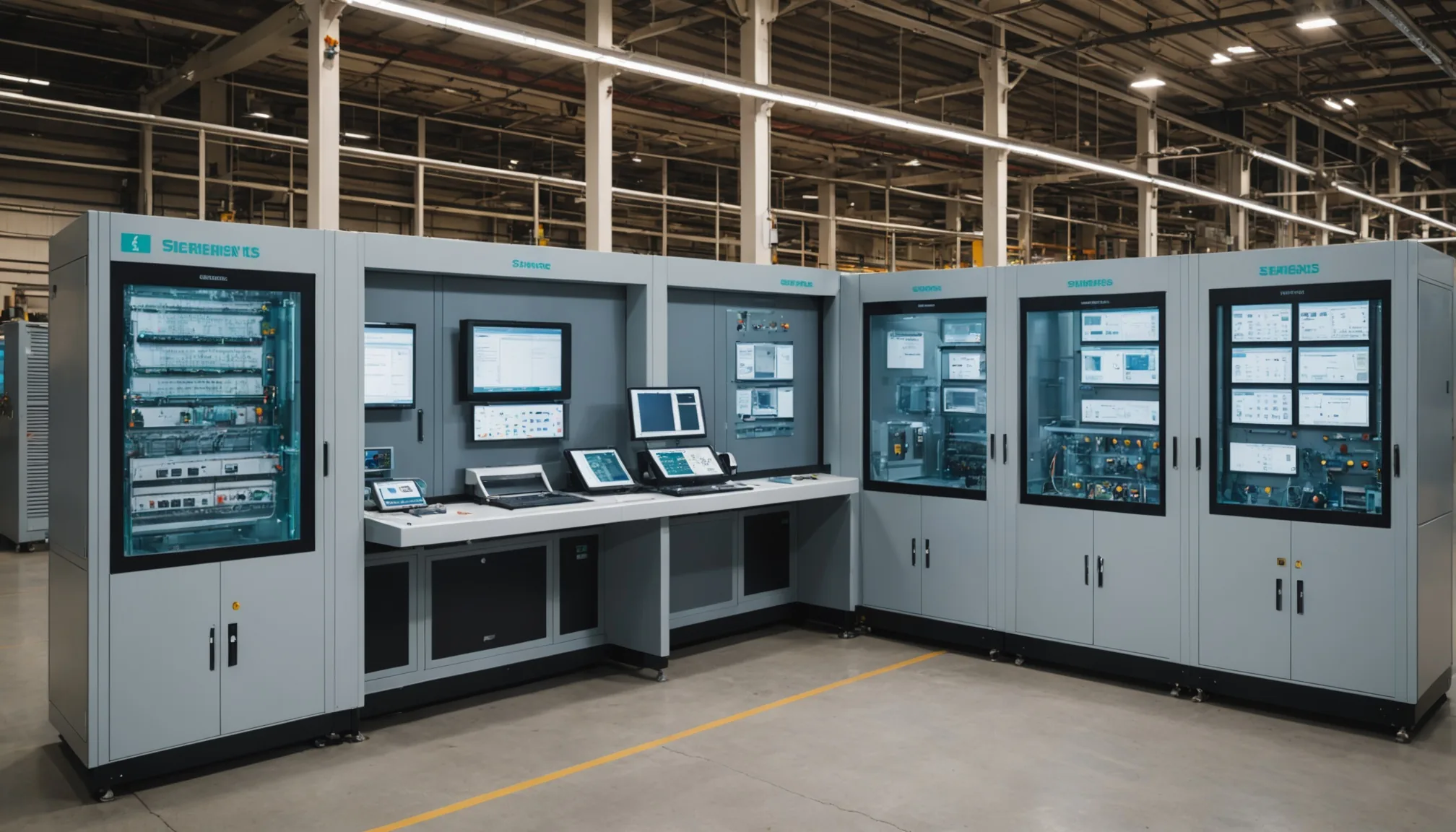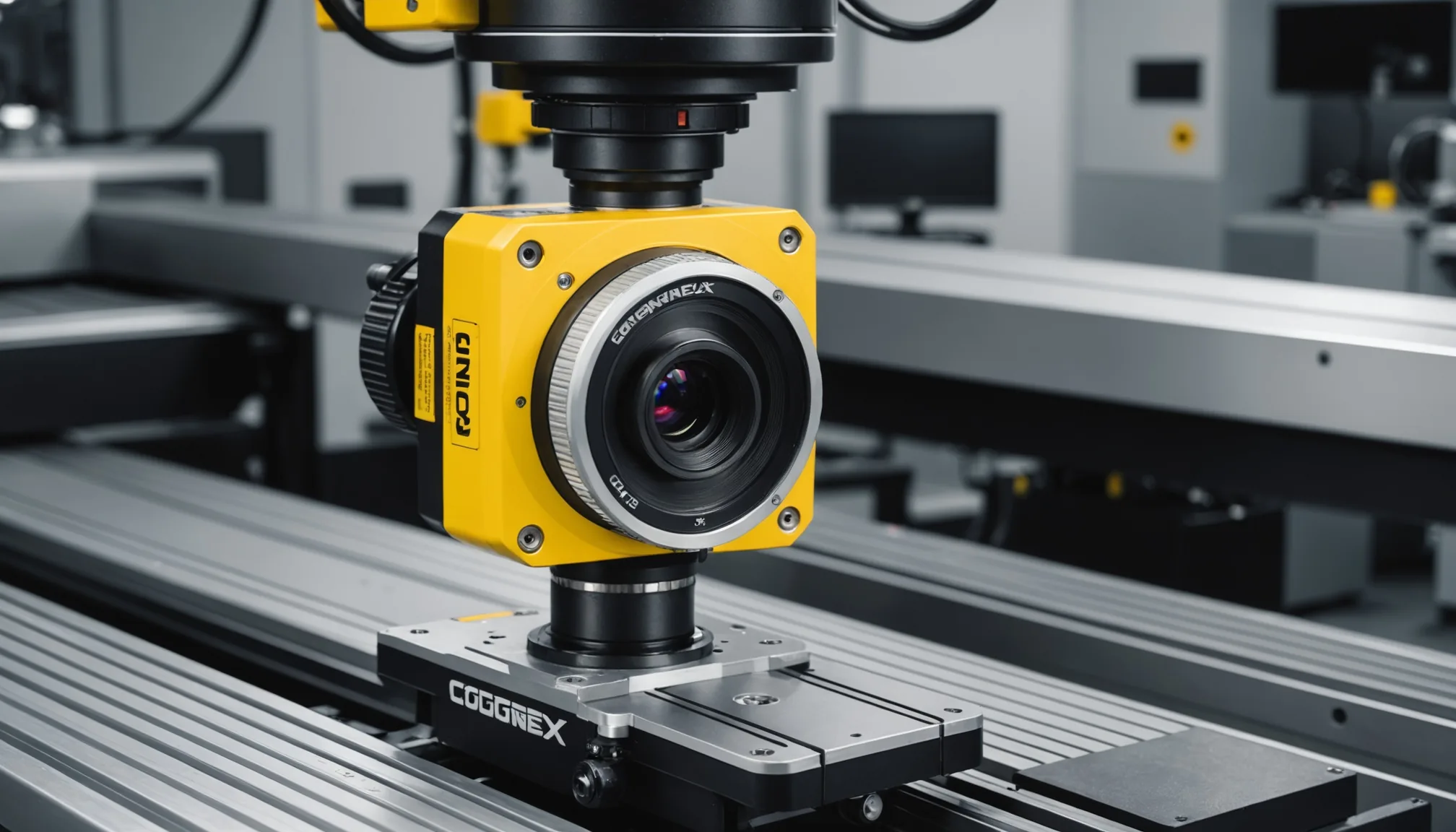

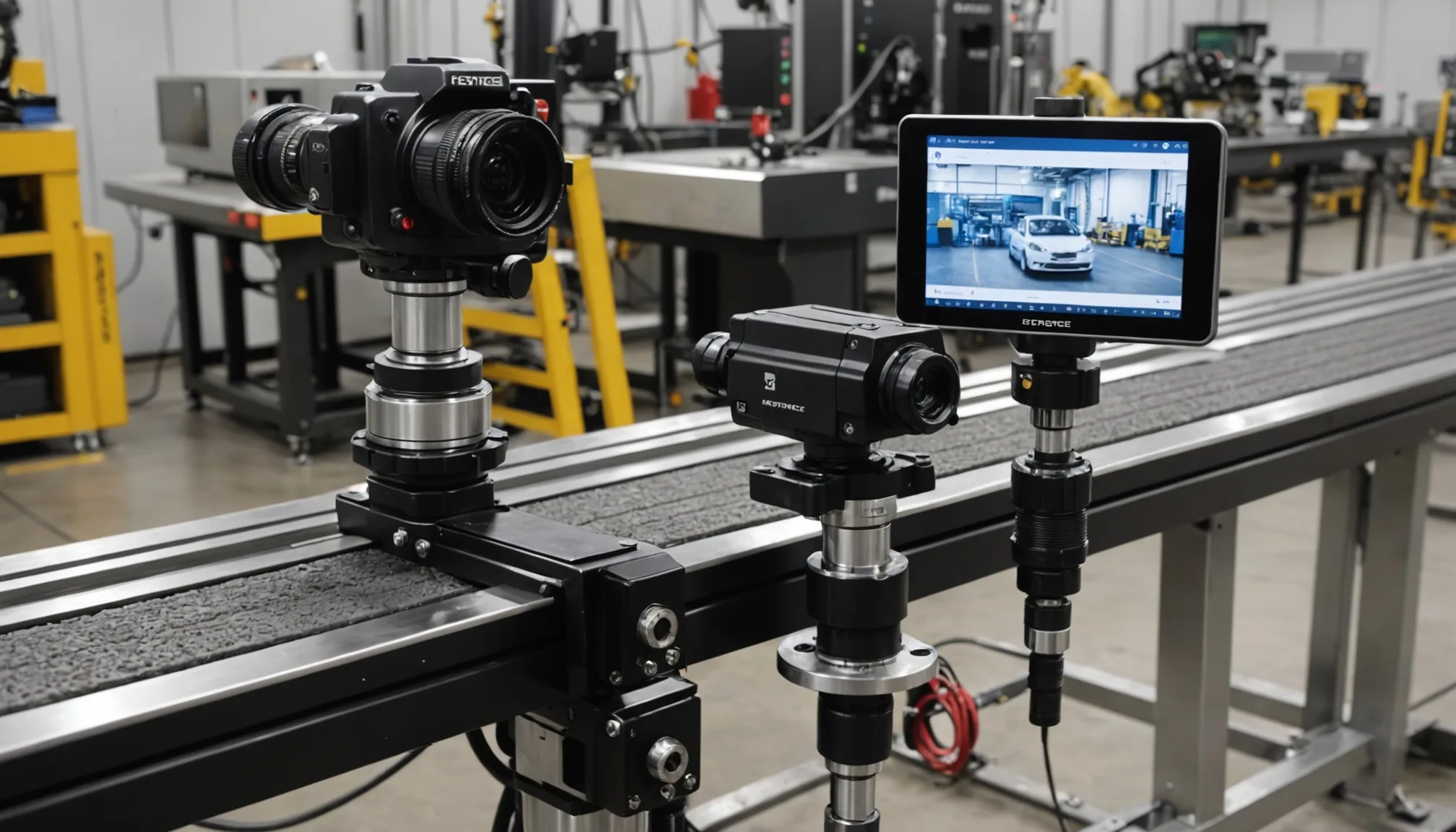
Keyence IV-Series smart cameras are workhorses. Walk through any automotive tier-1 facility and you'll find them bolted to fixture plates, triggering on every cycle, reliably flagging missing gaskets and flipped connectors. We've deployed alongside them enough times to have genuine respect for the platform. But here's the thing: the IV-Series has a hard ceiling. Ask it to catch fine surface texture defects on a brushed aluminum housing or identify micro-scratches on a plated contact surface, and the native processing pipeline simply isn't built for that job.
This article covers how to layer AI model inference on top of IV-Series hardware without touching the existing inspection logic, including the driver architecture, the image acquisition path, latency constraints, and the practical reality of running mixed-camera lines where some stations are Keyence and others are Basler.
What the IV-Series Does Well
The IV-Series excels at deterministic, threshold-based decisions. Presence and absence checks. Orientation verification. Binary pass/fail on features with a clear geometric signature. The embedded processor runs a fixed rule pipeline at extremely low latency, typically under 8ms end-to-end, and it does so with hardware-level reliability that general-purpose PC vision systems rarely match out of the box.
Its real strength is the tight coupling between image capture and output signal. The camera talks directly to the PLC via digital I/O or EtherNet/IP, which means the judgment reaches the reject actuator in the same PLC scan cycle that received the trigger. That determinism is not easy to replicate on a PC-based system.
For simple part verification, that's enough. In our experience, roughly 60% of a typical automotive assembly station's inspection requirements can be covered by presence/absence and basic pattern matching. The other 40% is where things get complicated.
Where It Falls Short: Fine Surface Defects
Surface texture defects are the hard case. Scratches, pinholes, mottling, micro-porosity on cast surfaces, coating voids under 0.3mm. These features don't have a clean geometric signature. Their appearance changes with lighting angle, surface finish lot variation, and the specific geometry of the part being inspected.
The IV-Series approaches these problems with brightness thresholds and binarization. When defects are large and consistent, it works. When defects are subtle or polymorphic, the reject rate becomes a tradeoff negotiation between false positives and escapes. We've seen facilities setting their brightness threshold so permissive that the camera is effectively not inspecting the surface at all, because a tight threshold generates a 12% false positive rate that the line can't absorb.
The root cause is architectural. The IV-Series processes a simplified image representation, not the raw sensor data. Deep learning inference needs access to the full image buffer, including the radiometric information that gets discarded before the native pipeline even begins. That's the integration point.
The Integration Architecture
The approach we use positions an AI inference engine as a parallel observer, not a replacement. The IV-Series continues to own the primary I/O path to the PLC. The AI layer intercepts the raw image stream before Keyence native processing consumes it, runs inference, and publishes its result to a shared quality event bus. The PLC consult logic reads both outputs.
Mechanically, this requires a network tap on the GigE Vision stream before it enters the IV-Series processor. Some IV-Series models expose an image output port for exactly this purpose. On models that don't, a managed switch with port mirroring captures the Ethernet traffic upstream of the camera's RJ45 port. The mirrored stream is received by an edge inference host, typically a compact industrial PC with a discrete GPU or an NVIDIA Jetson-class compute module.
The integration driver runs three threads:
- Acquisition thread: listens on the GigE Vision mirror stream, timestamps each frame against the PLC trigger signal, drops frames older than the configurable buffer window (default 200ms)
- Inference thread: receives frames from the acquisition queue, runs the defect classification model, publishes results with the matched trigger timestamp
- Arbiter thread: correlates AI results with IV-Series I/O signals on shared trigger ID, evaluates combined pass/fail logic, writes to the quality event bus
The arbiter logic is configurable per station. A typical config sets AI as an additional reject condition: IV-Series pass AND AI pass required for overall pass. Some stations run AI-only on surface inspection and IV-Series-only on presence checks, combining at the arbiter level.
Latency Budget with Keyence Overhead
This is where spec sheets diverge from production reality. The IV-Series native decision is available within 8-15ms of trigger, depending on model and inspection type. The PLC reject actuator typically has a 40-120ms window from trigger to actuation, depending on conveyor speed and actuator position.
The AI inference path on a Jetson AGX Orin running a ResNet-50-class model processes a 2MP frame in approximately 18-25ms including pre/post-processing. Add 3-5ms for GigE Vision frame delivery to the inference host and 2ms for arbiter logic, and the AI judgment arrives in 23-32ms. Well within the reject window for most conveyor configurations.
Fact: at 150mm/s conveyor speed with a 100ms actuator window, you have 35mm of part travel to deliver a reject signal. The 25ms AI path uses 37.5mm of that budget. Tight but viable. At 200mm/s the numbers get uncomfortable, which is when Jetson Orin NX with INT8 quantized models pushing inference below 12ms.
The timing analysis has to be done per station. Don't assume the budget clears without measuring.
Mixed-Camera Facilities: Keyence and Basler on the Same Line
Honestly, this is the most common scenario we encounter. A facility has 8 inspection stations. Four use Keyence IV-Series cameras installed during a fixture build 6 years ago. The other four were added during a capacity expansion and use Basler ace2 cameras with GenICam-compliant drivers. The quality team wants a unified AI defect detection layer across all eight stations without forklift-upgrading the Keyence hardware.
The integration driver handles this through camera-type adapters. Basler cameras with native GenICam support use the standard Pylon/GenTL acquisition path, which delivers full raw frames with less friction than the mirrored GigE Vision approach required for IV-Series. The arbiter and inference layers are identical regardless of camera type. From the quality event bus perspective, a reject signal from a Keyence-augmented station and a reject signal from a Basler station are indistinguishable.
Where they differ is in the pass/fail logic configuration. Basler stations can run AI as the primary inspection mechanism, with the AI model replacing threshold logic entirely. Keyence stations run AI as an overlay, because the IV-Series is still doing its native processing and its output has to be incorporated. The station config file specifies which mode each station runs, and the arbiter applies the appropriate logic without the inference engine needing to know what camera type it's reading from.
In our tracking across mixed-camera deployments, the Basler stations typically achieve 15-20% lower false positive rates than the augmented Keyence stations on identical defect types. That gap comes from image quality differences in the raw buffer, not from the AI model. The Keyence GigE Vision mirror path introduces occasional packet loss that the acquisition thread handles with frame drop, but frame drop means a 0.3% inspection coverage gap per shift. Worth knowing.
Deployment Considerations
A few practical notes from integration work we've done:
The IV-Series GigE Vision output is not always documented in the model's standard datasheet. Confirm before purchasing additional hardware. Some IV-Series 2 models require a firmware update to enable the external output feature, and Keyence support response time on firmware requests can run 2-3 weeks.
Edge inference host placement matters more than most teams anticipate. The host should be within 3 meters of the camera to keep GigE Vision cable runs under the 100m Ethernet limit without needing managed switches, which add cost and failure points. In practice, 3 meters is tight in many fixture designs, so plan the enclosure position before the fixture is bolted down.
Model training data for Keyence-augmented stations should come from the mirrored stream, not from a separate camera. The image artifacts introduced by the tap architecture, including JPEG compression if the IV-Series is not outputting raw, need to be present in training data or the model's in-production performance will degrade versus validation benchmarks by 8-12 percentage points on subtle defects.
The Bottom Line
Replacing IV-Series cameras facility-wide to gain AI defect capability is rarely the right call. The hardware is still performing its primary job reliably, and the capital cost of a camera swap program across 20-plus stations adds up fast. The integration driver approach keeps the IV-Series doing presence and orientation checks at its native speed while adding AI coverage for surface defects on top.
It's not zero friction. The tap architecture, timing analysis, and station-by-station arbiter configuration require engineering time. But the outcome, a unified quality event stream across your entire line with AI defect coverage on hardware you already own, is worth the integration investment for most tier-1 facilities operating at this scale.
Want to discuss whether this architecture fits your line configuration? Contact the Qcvisionly team for a technical review.