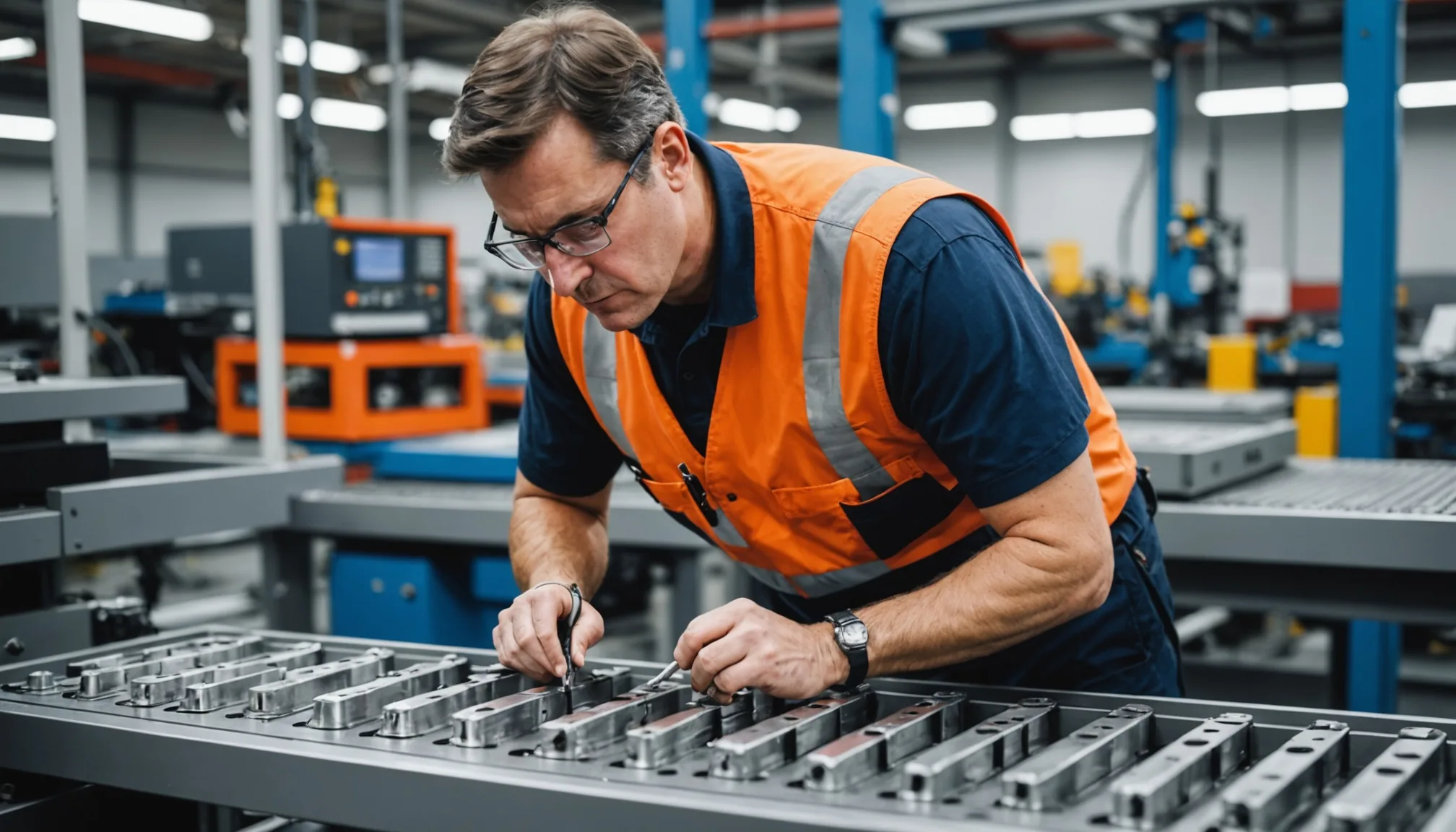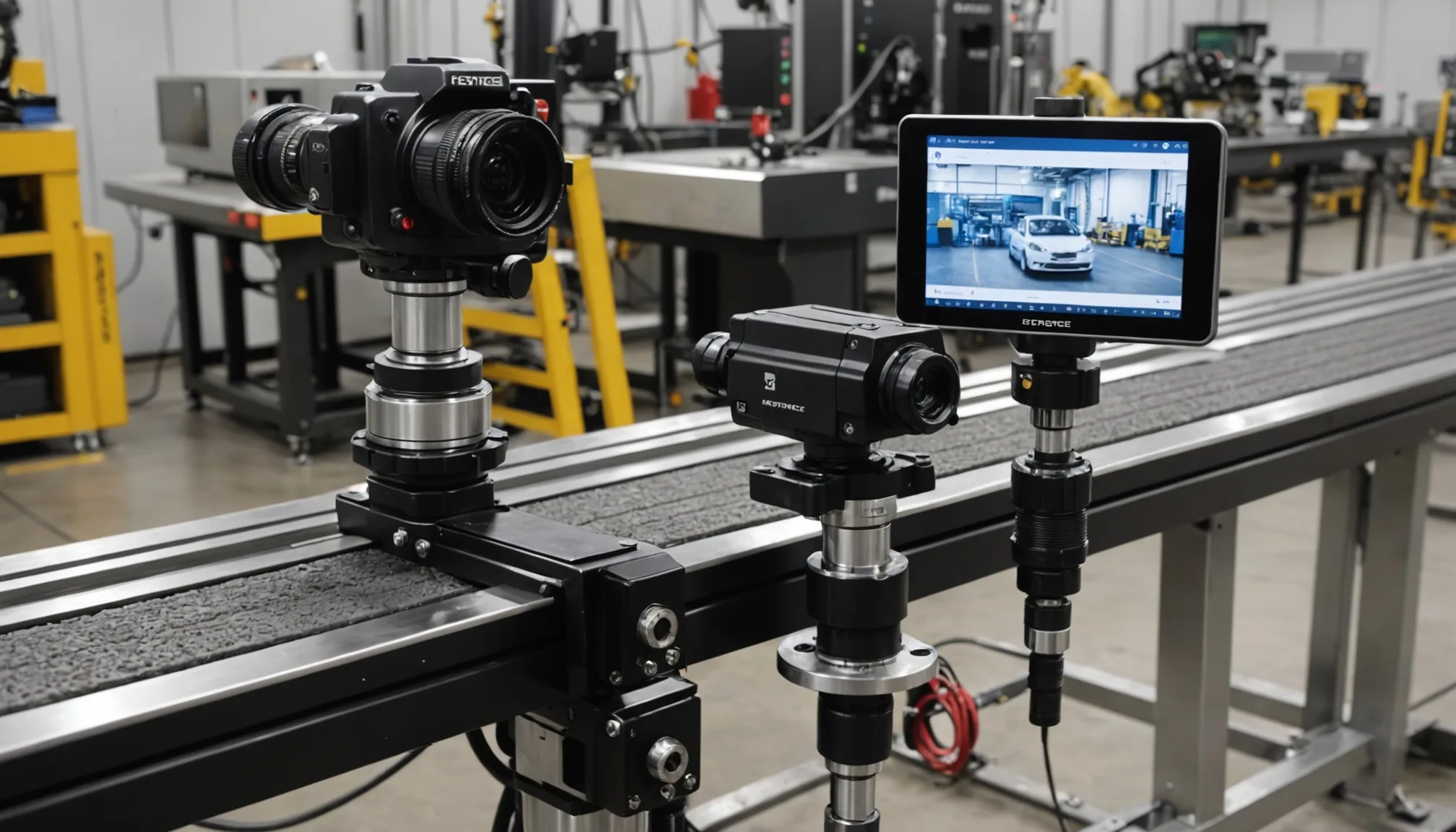

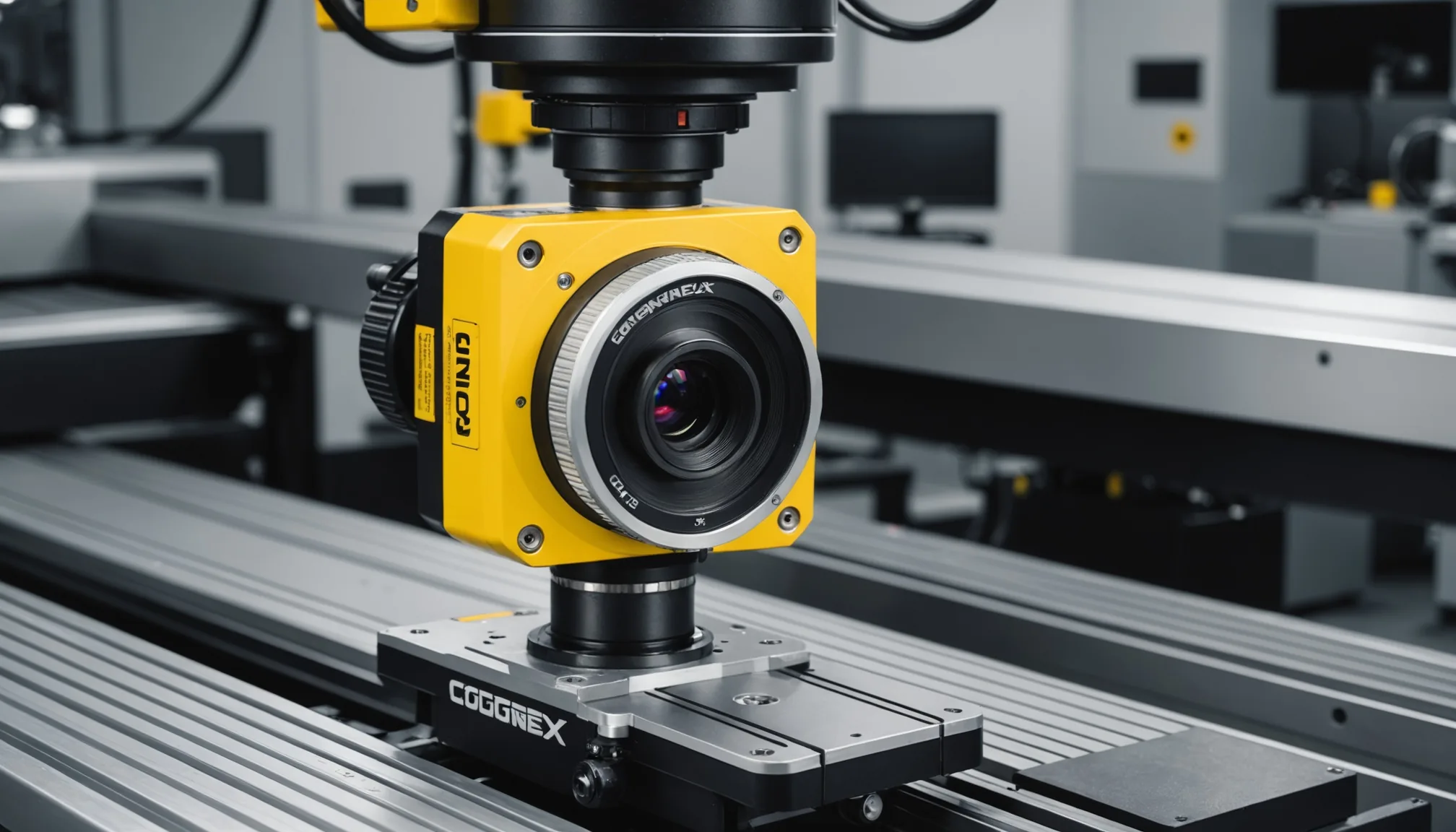
Most automotive tier-1 plants running Cognex VisionPro or In-Sight systems made a good call when they bought them. Rule-based vision handles dimensional gauging, presence/absence checks, and barcode reads reliably. Where things break down is on fine surface quality: micro-scratches, porosity pitting, subtle color banding, and edge burrs under 0.3 mm. We've seen plants with perfectly tuned Cognex setups still logging 4-6% defect escapes on surface-critical stampings. Not because the camera is wrong. Because the inspection logic was never designed for that class of defect.
What Rule-Based Vision Is Actually Good At
To be fair about this: Cognex rule-based tools are genuinely effective for a defined set of checks. Blob analysis finds gross dimensional deviations. PatMax locates features to sub-pixel accuracy for go/no-go gauging. Edge tools measure caliper distances and detect missing components. These work because the defect geometry is consistent and the decision boundary is explicit.
In our experience, the failure modes start when manufacturers try to extend these tools into texture anomaly detection. You can push Caliper and Surface tools to flag some scratches, but you end up with threshold values so tight that false-positive rates climb above 8-10%. Production lines can't tolerate that. Inspectors start overriding alarms. The system becomes background noise.
The fundamental issue is architectural. Rule-based systems ask: "Does this image match the expected pattern?" AI inference asks: "Does this surface contain any pattern that correlates with defects in the training set?" That's a different question, and it's the right question for surface quality.
What the AI Layer Actually Does
Adding AI inference on top of an existing Cognex installation means introducing a second decision path, not replacing the first. Here's how that works in practice.
The Cognex system continues to run its existing recipe: dimensional gauging, presence checks, any OCR or barcode reads. Those results are passed forward. Simultaneously, the camera feed is captured by a parallel inference engine, typically running on an edge GPU co-located at the station. The AI model evaluates the image for anomalies and returns a defect class and confidence score within 80-120 ms on current hardware, well within typical cycle times for stamping and injection molding lines.
The combined output routes to your existing PLC reject logic. A part fails if either path flags it. You haven't touched the Cognex recipe. Your existing calibration data and ROI definitions stay intact. The AI layer adds capability; it doesn't create a dependency on it.
Practical note: the AI model doesn't need to replicate what Cognex already does. Train it only on defect classes that your current Cognex recipe consistently misses. That keeps the training dataset focused and reduces commissioning time by 30-40%.
Basler Camera Compatibility
A common question we get: "Can we use our existing Cognex cameras for the AI inference feed, or do we need Basler hardware?"
Honest answer: it depends on the camera generation. Cognex In-Sight 7000 and 9000 series cameras output images via GigE Vision and GenICam, which means they can feed an external inference engine directly. In-Sight 2000 and D900 series are more self-contained and harder to tap without modifying the vision program to export images explicitly.
Basler ace 2 and boost cameras are common choices for new AI inference deployments because they're well-supported by open inference frameworks and have predictable latency characteristics. If your existing Cognex camera hardware can't export a clean image stream without architectural surgery, adding a dedicated Basler camera at the same station is usually the faster path. In our work, adding a second camera at an existing station typically costs 2-3 days of integration time versus 4-7 days trying to retro-fit a constrained In-Sight camera export. The hardware cost difference is small relative to engineering time.
| Cognex Camera Model | External Image Export | AI Integration Path |
|---|---|---|
| In-Sight 7000 / 9000 | GigE Vision, GenICam native | Direct feed to inference engine |
| In-Sight 2000 / D900 | Limited; requires explicit image export in vision program | Modify Cognex program or add parallel Basler camera |
| VisionPro PC-based | Full image access via SDK | Integrate inference call directly in VisionPro script |
Commissioning Timeline: What 2-4 Days Per Station Means
Two to four days per station is a realistic range, not a marketing number. Here's what fits inside it.
Day 1: image collection and labeling. You need a minimum of 300-500 labeled defect images and 200+ clean images per defect class. If your quality team has been saving defect examples from previous escapes, this goes faster. If not, you're capturing live production samples and that sets the pace. Day one is usually hardware setup plus whatever image collection is possible during that shift.
Day 2: initial model training and threshold calibration. Modern transfer learning on a pre-trained backbone means a first-pass model is trainable in 2-4 hours on a decent GPU. The rest of the day is tuning the confidence threshold against your acceptable false-positive rate. You're targeting less than 2% false positives on your validation set before going live.
Day 3: line integration and shadow mode. The inference engine runs in parallel with production but doesn't trigger rejects. You're comparing its calls against your quality inspectors in real time and building confidence the thresholds are set correctly. Most stations need at least one full shift in shadow mode before going live.
Day 4 (when needed): live production sign-off. If shadow mode results were clean, you switch to active rejection and run a monitored production run. Some stations need a second day here if defect rates are low and sample size for validation is thin. That's fine. Don't rush this step.
When to Keep Cognex Logic vs. When to Replace It
This is where we get the most pushback, so let's be direct. Keep the Cognex logic when:
- It's running dimensional checks, presence/absence, or OCR/barcode reads. AI models don't add value over rule-based tools for those tasks.
- Your PPAP documentation or customer control plan specifies a particular inspection method. Changing those requires a formal change notice.
- The current false-positive rate is acceptable and the check isn't the source of escapes. If it's working, don't touch it.
Consider replacing or bypassing Cognex logic when:
- You have a rule-based surface texture check that requires constant threshold adjustment as tooling wears. AI models tolerate gradual surface variation much better than fixed-threshold rules.
- You're spending more than 2 hours per week re-tuning Cognex recipes to handle normal process variation. That's a signal the problem exceeds what rule-based vision was designed for.
- Your escape analysis shows systematic misses on a specific defect class that isn't dimensional. Those are AI territory.
In practice, most stations we've worked on end up running Cognex for dimensional gauging and the AI layer for surface quality. That's not a default recommendation. It's just the split that reflects where each technology performs best.
Getting Started Without a Complete Overhaul
The practical starting point is to identify your highest-escape defect class and confirm whether it's dimensional or surface. If it's surface, pull 500 images from your existing quality records and check how consistently your current Cognex tool catches it. That number tells you whether this is a configuration problem or a technology gap.
If it's a technology gap, you're looking at a scoped pilot: one station, one defect class, 30 days of parallel operation data before committing to a broader rollout. We'd rather show 90 days of data on one station than promises about what a full-line deployment might achieve. The data from that pilot also becomes your training baseline for the next station, which cuts commissioning time by roughly 40% compared to starting from scratch on each new line.
The upgrade path exists. It's not a rip-and-replace decision, and it doesn't require camera hardware changes in most cases. The question is whether your current escape rate justifies the engineering investment. For most tier-1 lines running surface-critical parts, the answer is yes.
Want to scope an AI inference upgrade for your Cognex installation? Contact the Qcvisionly team to discuss your specific line configuration.