
One hundred parts per million. Written into OEM supplier agreements, it sounds abstract. On the line, it means one defective unit for every 10,000 you ship. At 30 parts per minute, that's a single escape allowed across roughly 5.5 hours of production. In our experience, that's a threshold that exposes every weakness in a manual inspection program.
What 100 PPM Actually Means in Production Terms
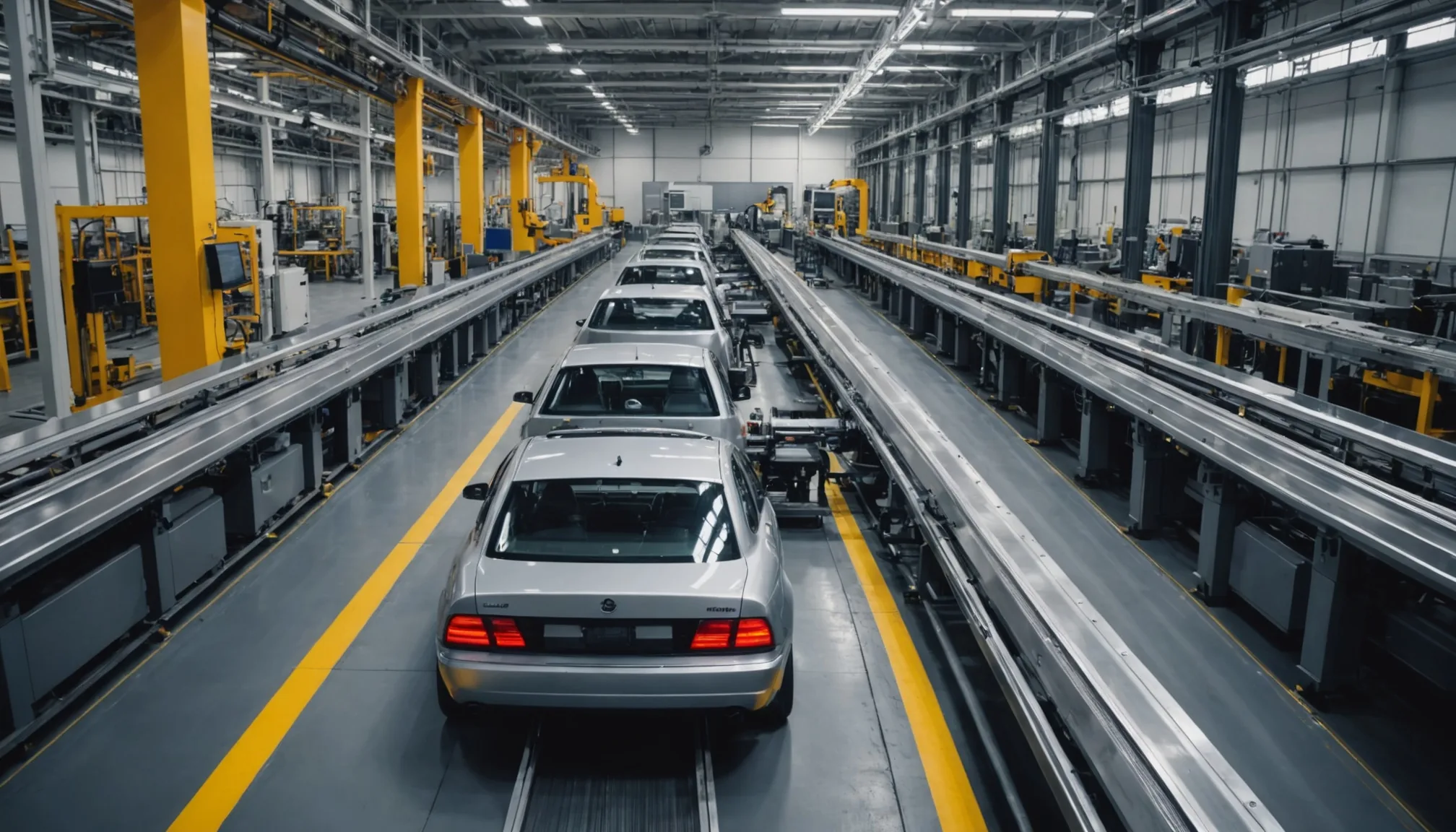
The math is unforgiving. A 30-unit-per-minute line runs roughly 14,400 parts per shift. Hit 100 ppm and you're allowed 1.44 defective parts out the door per shift. In practice, that rounds to zero tolerance across most production days.
The harder reality: OEM contracts don't average across quarters. A single incident report from a customer line can trigger a containment event regardless of your trailing three-month ppm figure. So the operational target isn't exactly 100 ppm. It's zero escapes measured against the incoming inspection on the customer's floor.
That's the number that should drive your inspection architecture decisions. Not the contract clause. The customer's incoming dock.
The Manual Inspection Math Problem
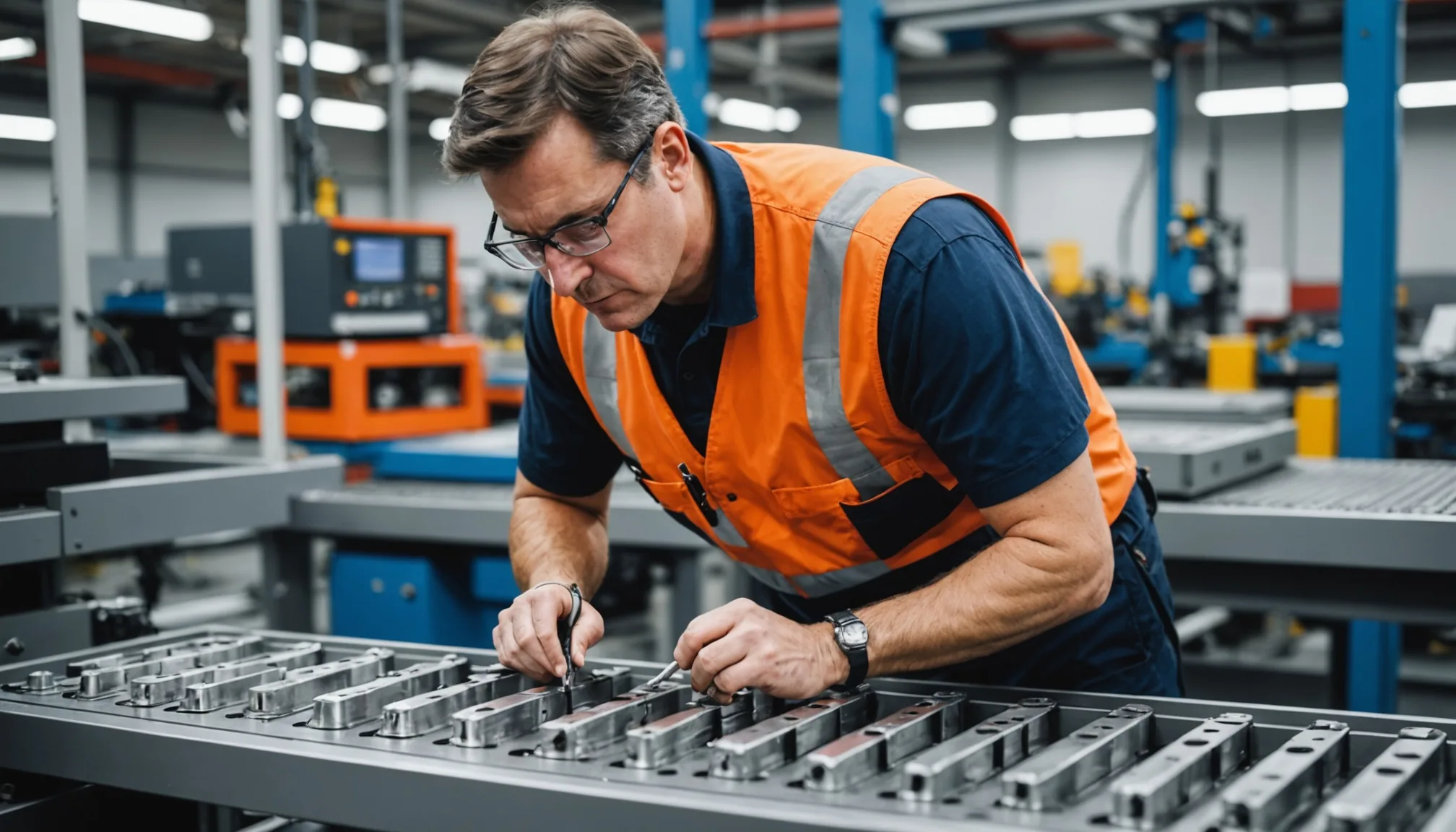
We've tracked escape rates across multiple manual inspection deployments. The pattern is consistent: trained human inspectors operating at sustainable line pace miss between 15% and 30% of presented defects. This isn't a training failure. It's physiology.
Run the numbers against a typical defect frequency. If your process produces defects at 800 ppm before inspection, and your inspectors catch 78% of them, your shipped quality is roughly 176 ppm. Already above the OEM threshold. Apply a 70% catch rate on a worse process day and you're at 240 ppm. One bad shift can generate a customer complaint.
| Pre-Inspection Defect Rate | Inspector Catch Rate | Shipped PPM | Meets 100 PPM Target? |
|---|---|---|---|
| 800 ppm | 85% | 120 ppm | No |
| 800 ppm | 92% | 64 ppm | Yes |
| 400 ppm | 78% | 88 ppm | Yes (marginal) |
| 400 ppm | 70% | 120 ppm | No |
Manual inspection can theoretically reach 100 ppm compliance. But only when your upstream defect frequency is already low and your inspector performance doesn't dip. Two variables you can't guarantee across every shift, every operator, every fatigue hour.
Why Slowing the Line Isn't a Real Option
The first instinct when inspection keeps missing defects is to slow down the line and give inspectors more time per part. This works, in the sense that a slower line improves catch rates. It doesn't work economically.
Tier-1 suppliers operate under OEM-dictated production schedules. Your customer's sequenced delivery window doesn't flex because you decided inspection needed more time. A 15% line speed reduction means a 15% reduction in output against fixed labor and overhead costs. Fact: in most high-volume automotive programs, that delta converts directly to margin erosion, not schedule flexibility.
Holding inspection gates off-line are similarly constrained. Adding a hold zone introduces WIP buildup, FIFO risk, and additional material handling labor. For high-mix programs with variant-specific inspection criteria, the administrative overhead alone creates its own quality risk.
The 100 ppm requirement wasn't designed around an economics model that includes slowing the line. It was designed assuming automated inspection.
The 80ms Inspection Window
At 30 units per minute, each part is in the inspection field of view for approximately 2 seconds from entry to exit. Allowing for mechanical positioning and part presentation, the usable AI inference window is roughly 80ms per image. That's not a lot of time. It's enough.
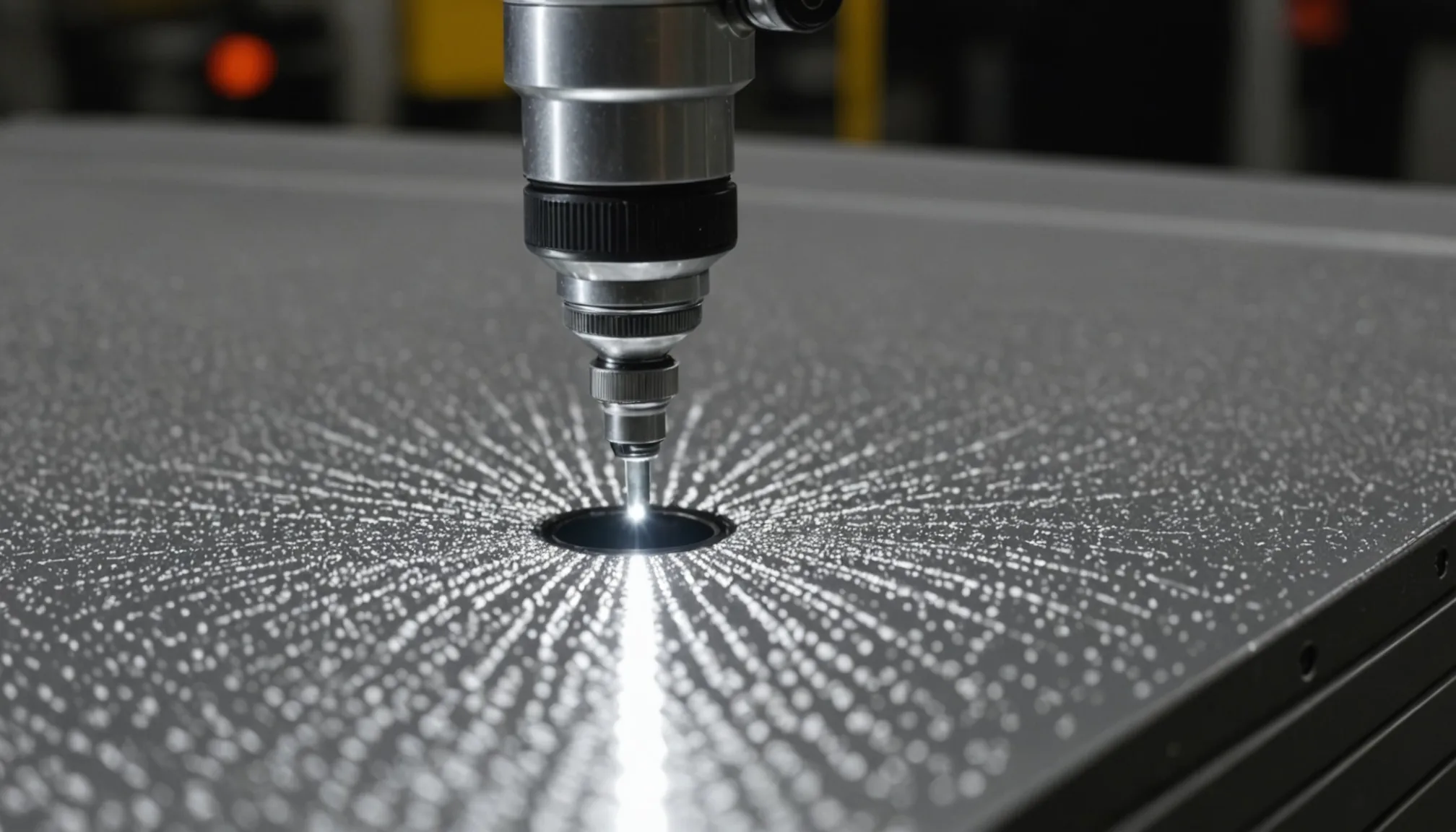
Modern convolutional neural networks running on dedicated inference hardware can complete a single-image classification in 18 to 40ms under production load. Running two cameras on a single part presentation doubles your surface coverage without breaching the 80ms window. We've seen configurations running four simultaneous inference streams, each completing under 60ms, covering top, bottom, and both side profiles in one pass.
Here's the thing: the speed constraint isn't the limiting factor in most deployments. The limiting factor is camera placement and lighting geometry. Getting consistent, glare-free illumination on complex surface geometries is an engineering problem that takes more time to solve than the AI training itself.
False Reject Rate Management
Meeting a 100 ppm escape rate requirement while running at 99.97% throughput efficiency means managing two opposing error types. False negatives escape to the customer. False positives stop good parts.
Our data shows that new deployments typically see false reject rates between 0.3% and 1.2% during the first 90 days as the model encounters production lighting variation, part presentation inconsistency, and edge-case cosmetic variation that wasn't fully represented in training data. A 0.5% false reject rate at 14,400 parts per shift is 72 parts flagged and diverted that require manual re-inspection confirmation.
That's manageable. It becomes a production problem when teams over-tighten sensitivity thresholds trying to drive escape rates to zero. Counterintuitive? Maybe. True? Absolutely. An overfitted model running at maximum sensitivity catches more real defects but generates false reject spikes under lighting variation, creating inspection bottlenecks that defeat the throughput objective.
The right approach is calibrated sensitivity against a defined acceptable escape target. 100 ppm shipped means your model doesn't need to catch 100% of defects that enter the inspection station. It needs to catch enough of them, consistently, to ship at or below threshold. That's a statistical process control problem, not a maximum-sensitivity problem.
Pass/Fail Decision Workflow with PLC Divert
The inspection decision loop has to be deterministic. An AI model that outputs a confidence score is useful for model monitoring. It is not useful as a direct PLC input. The PLC wants a binary: pass or reject. That conversion has to happen in software before the signal hits the control system.
A working configuration looks like this:
- Camera triggers on part arrival signal from upstream conveyor sensor.
- Image acquisition completes in under 5ms at full resolution.
- Inference model classifies within the 80ms window, outputting defect class confidence scores.
- Decision logic applies pre-set confidence thresholds per defect class, converting to PASS/REJECT binary.
- PLC receives the binary output and actuates divert gate before the part reaches the divert point, typically 300 to 600ms downstream.
- Rejected parts enter a hold lane. Confirmed rejects feed back to SPC as counted defects. False reject re-inspection results feed back as model performance data.
The feedback loop matters as much as the detection. Without structured re-inspection of diverted parts, you can't distinguish model drift from genuine quality shifts. In our experience, teams that skip the feedback step end up re-training models reactively instead of maintaining them proactively, and they're always a step behind the process.
Building Toward 100 PPM Compliance
Hitting 100 ppm as a shipped quality target is achievable without adding inspection holds and without reducing line speed. The architecture that gets you there combines in-line AI inference, deterministic PLC integration, and a feedback loop that continuously feeds re-inspection data back into model maintenance.
None of that is experimental. These are production-validated configurations running on tier-1 lines today. The engineering work is real, the commissioning takes time, and the first 90 days of operation require active model tuning. But the arithmetic works: an AI inspection system maintaining a 96% true detection rate on an 800 ppm upstream process ships at 32 ppm. Well inside the OEM threshold. Every shift, regardless of inspector fatigue.
Practical note: before sizing your AI inspection system, establish your upstream process defect frequency under normal production conditions. If you don't know your baseline ppm before the inspection station, you're solving the wrong problem first.
Working toward a 100 ppm OEM commitment? Talk to our engineering team about what inspection architecture fits your line configuration.